
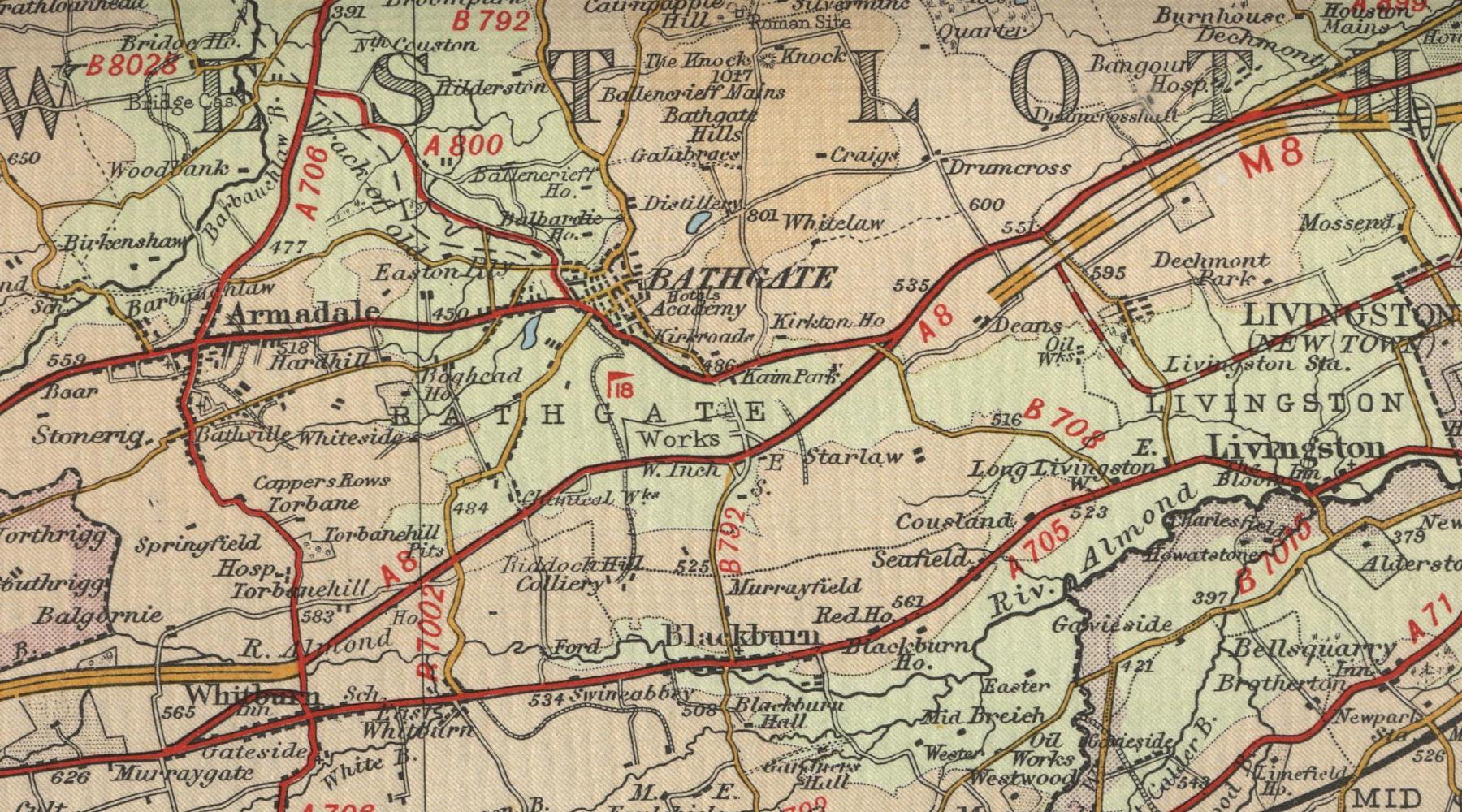
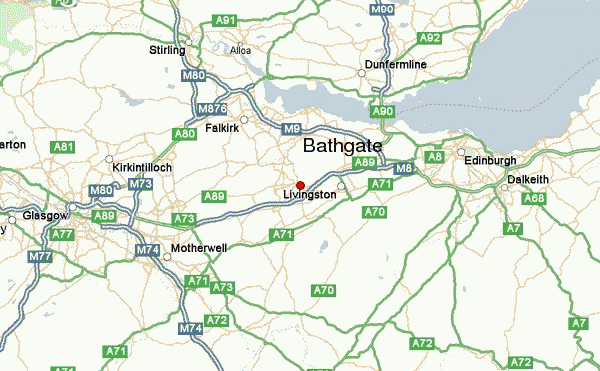
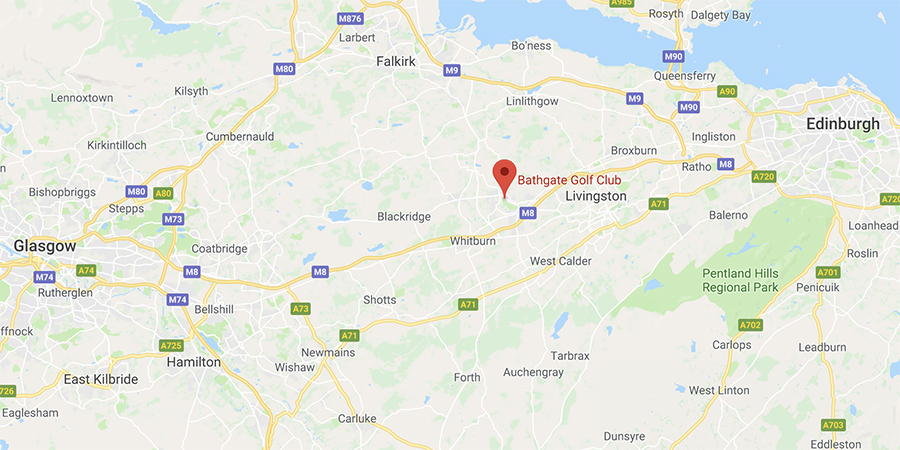
Bathgate, a town in West Lothian, Scotland, presents a fascinating landscape revealed through its map. Located roughly 20 miles west of Edinburgh and 5 miles south of Linlithgow, Bathgate’s map showcases a blend of historical development and modern expansion, heavily influenced by its industrial past and strategic location.
Central to understanding the map of Bathgate is the A89, the main road that historically served as a vital artery connecting Edinburgh and Glasgow. This road, running east-west through the town, essentially bisects Bathgate, creating a North and South divide. Much of Bathgate’s older infrastructure and original town center is clustered along this route. This area includes the main shopping district, civic buildings, and traditional housing.
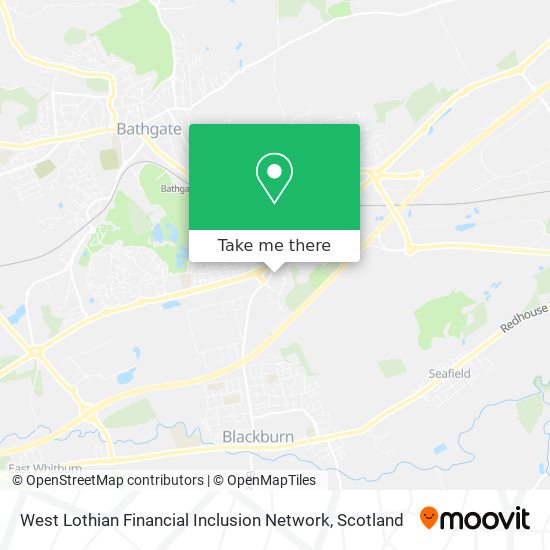
To the north of the A89, the map illustrates a more varied terrain. The landscape begins to rise, transitioning into more residential areas developed in the late 20th and early 21st centuries. This area showcases modern housing estates, often characterized by cul-de-sacs and planned layouts, reflecting a shift away from the denser, grid-like street patterns of the older town center. The presence of green spaces is also more pronounced here, with parks and recreational areas interspersed amongst the housing.
The south side of the A89 reveals a more industrial and post-industrial character. The railway line, another crucial element of Bathgate’s transport infrastructure, runs parallel to the A89. The Bathgate railway station acts as a key transportation hub, facilitating commuter traffic to Edinburgh and Glasgow. Close proximity to the railway has historically supported industrial activities, and the map will likely show traces of former industrial sites, some of which have been redeveloped for residential or commercial use.
Looking closer at the map reveals the impact of Bathgate’s mining history. While the mines themselves are no longer active, subtle topographic variations and place names may hint at their former presence. Remnants of mining infrastructure, now often integrated into the landscape or repurposed for other uses, can sometimes be identified. The contours of the land will subtly reveal the impact of past mining operations.
Beyond the immediate town center, the map of Bathgate also displays the surrounding rural landscape. To the west, the town gradually transitions into farmland and open countryside. To the east, the M8 motorway acts as a major transport corridor, influencing development patterns and accessibility. The presence of smaller villages and hamlets surrounding Bathgate highlights its role as a regional center.
Finally, any current map of Bathgate will highlight modern developments, including new retail parks, industrial estates on the outskirts, and ongoing housing construction. These features illustrate the town’s continued growth and its adaptation to the demands of the 21st century. Examining the map of Bathgate therefore offers a comprehensive overview of its past, present, and future, reflecting its evolution from a mining town to a commuter suburb with its own unique identity.
 1800×1000 bathgate map from www.oldemaps.co.uk
 400×472 bathgate bathgate map from www.getthedata.com
 1300×1390 map bathgate cut stock images pictures alamy from www.alamy.com
 1300×956 map bathgate res stock photography images alamy from www.alamy.com
 1000×623 maps bathgate lothian francis frith from www.francisfrith.com
 1200×615 bathgate west lothian staycation town from www.fiveminutesspare.com
 1200×800 bathgate pits scottish shale from scottishshale.co.uk
 600×371 bathgate weather forecast from www.weather-forecast.com
 900×450 west lothian golf courses find hidden gems region from thehomeofgolf.com
 1300×1084 west lothian region scotland great britain open street map locations names major from www.alamy.com
 373×358 west lothian west lothian map from www.scottish-places.info
 600×551 map scotland west lothian uk map uk atlas from www.map-of-uk.co.uk
 420×263 bathgate maps books memories francis frith from www.francisfrith.com
 365×365 links bathgate history from bathgate.town
 500×571 bathgate wikipedia from en.wikipedia.org
 600×300 bathgate flats houses sale rent bathgate from espc.com
 550×550 west lothian financial inclusion network bathgate bus train light rail from moovitapp.com
 850×482 physical map bathgate from www.maphill.com
 615×409 signs put town map daily record from www.dailyrecord.co.uk
 450×336 easter bathgate west lothian scotland ncap national collection aerial photography from ncap.org.uk
 640×427 bathgate west lothian area information map walks from getoutside.ordnancesurvey.co.uk
 580×486 sar scotland town east bathgate bathgate west lothian scotland from britainfromabove.org.uk
 640×480 bathgate richard webb cc sa geograph britain ireland from www.geograph.org.uk
 97×140 street map bathgate town centre west lothian scotland uk from www.streetmapz.co.uk
 140×172 street map bathgate west lothian surrounding areas from www.scotland.maps2013.co.uk
 640×480 george street bathgate richard webb cc sa geograph britain ireland from www.geograph.org.uk